


Case Study: Creating an annual strategic roadmap
How I led development of the Whirli's strategic product roadmap, blending the needs of the business, stakeholders and users in an operationally-complex product.
Setting up priorities, processes and product excellence at a fast-growing scaleup with a broad but immature product suite and competing needs from operational and commercial functions
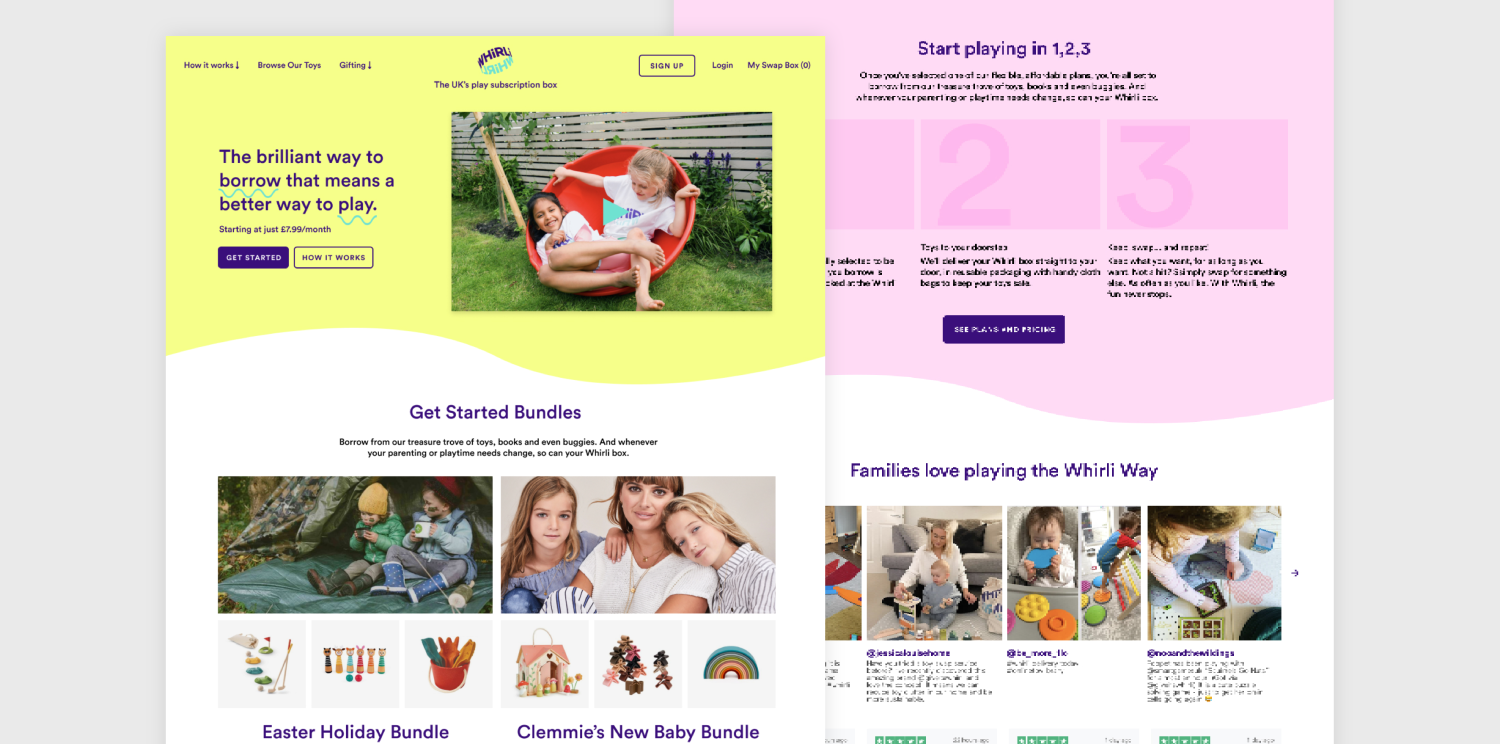
Whirli is a first of its kind toy-swapping subscription service. Parents sign up and receive a token allowance, which they swap for toys in the Whirli library. We deliver the toys from our warehouse, and the parents send them back when they’re done, ready to play with something new.
The business was on the path to Series A fundraise, with strong MoM subscriber growth. Priorities to achieve to prove out the business to investors were 2.5-x3 growth, unit cost reduction, LTV:CAC optimisation, exemplary customer experience and satisfaction, and proof of scalability and innovation.
The product suite comprised the marketing website, user account area, back office CMS for inventory and user management, and a back office for warehouse fulfilment. Most of these were in a MVP stage, the website and app having been built by an external agency without much maintenance and the CMS not fit for core user jobs to be done.
The org comprised a leadership team of operations, marketing and finance, alongside the MD/founder and myself heading up product. Other core functions were CX, content marketing, brand and engineering.
With a low head count and a lot to do, we needed to carefully plot our 2022 strategy, roadmap and team design to maximise efficiency and impact.
I needed to:
Business case gathering & specs documented
I spoke to every key stakeholder in the business to understand their needs, including:
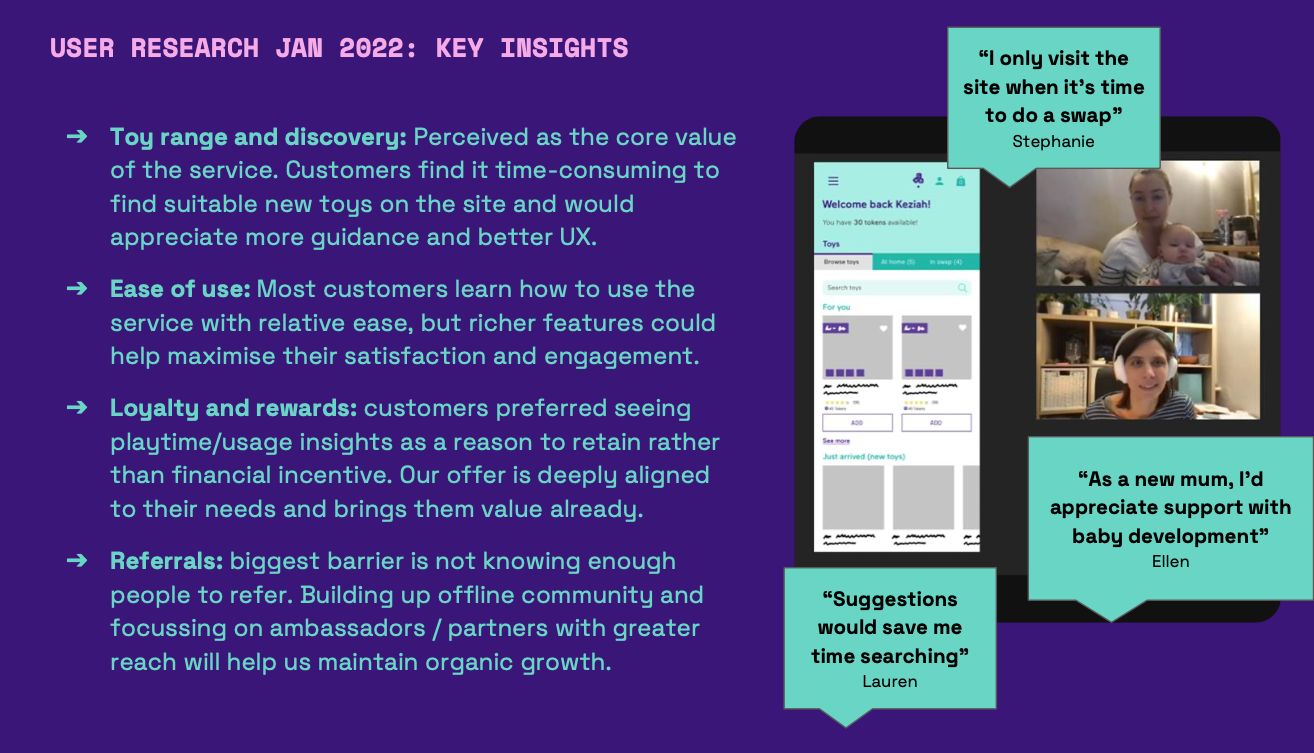
Being relatively new to the business, I wanted to bolster this discovery with my own primary research on problem and opportunity spaces, so I:
From this discovery, I was able to draft product docs which outlined key areas of scope and priority for skateholders and the product. I shared these back to make sure everyone was on the same page.
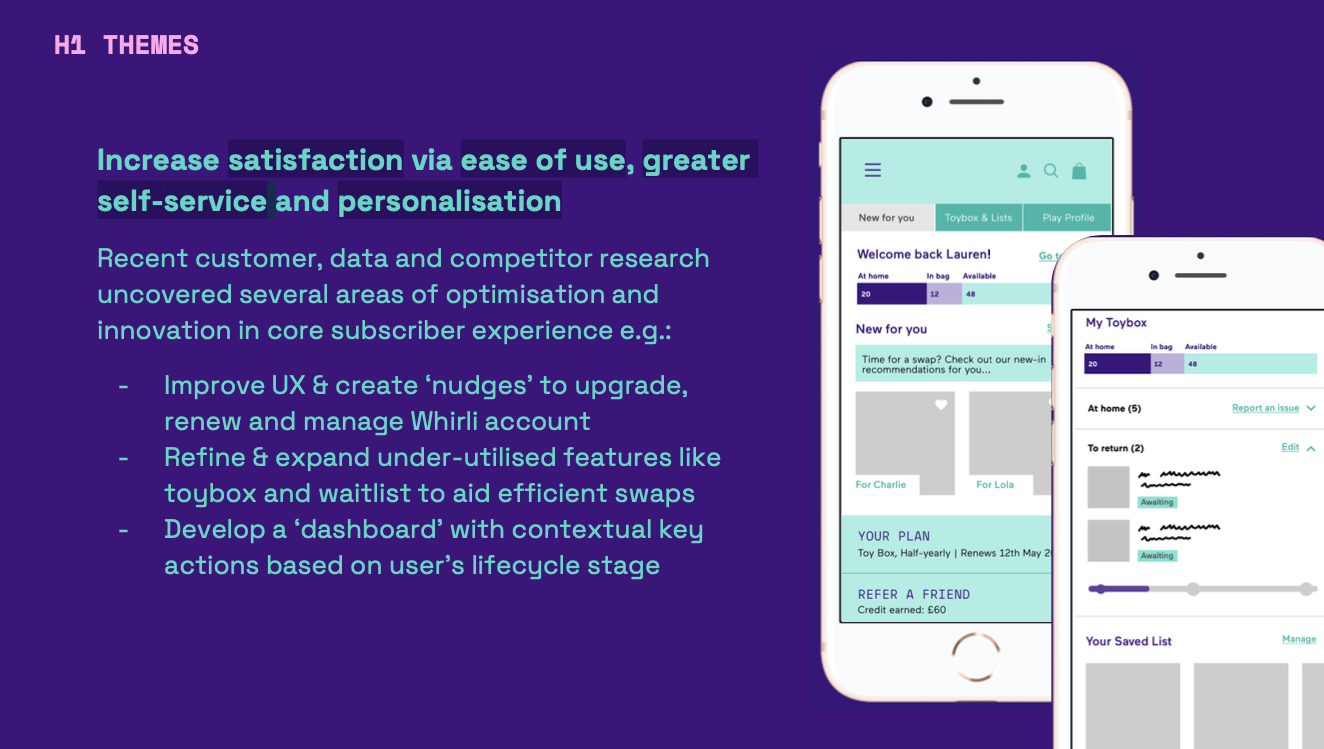
Strategy and roadmapping
With all needs and opportunities uncovered, I needed to help quantify, prioritise and size the effort to ensure realistic delivery and impact.
Working backwards from KPIs, I fitted initiatives into an opportunity tree which helped map the ideas into the impact they were expected to drive. This was a useful artefact to share back to the leadership team and discuss tradeoffs and risks and align their plans to product dependencies.
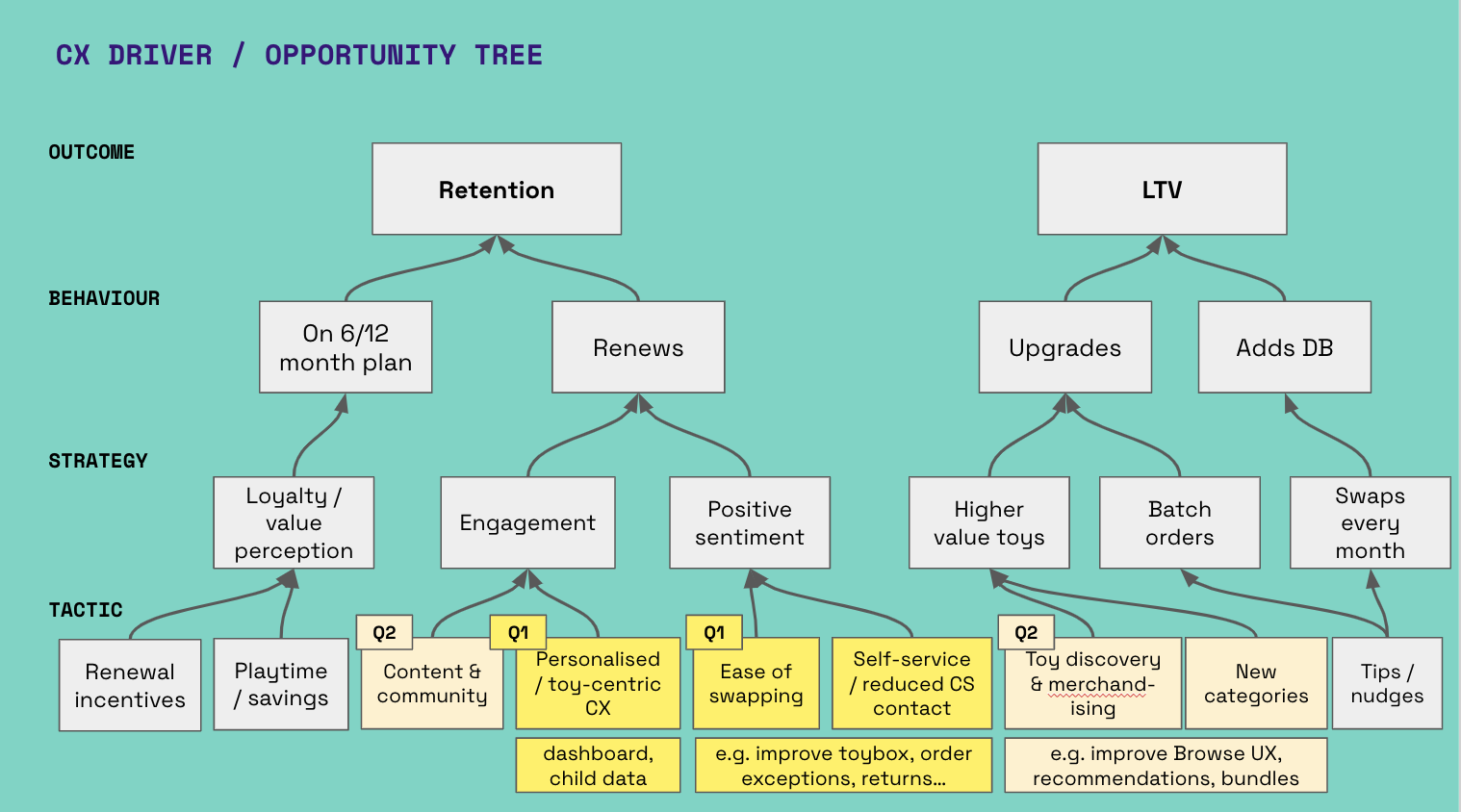
I considered strategic sequencing when deciding how to prioritise various areas. In this case for example, frontloading a customer-experience focus in H1 was in service of helping us retain Q4 signups, whereas operational and growth work was needed in time for the Q4 peak period.
Finally, I sought input from engineering on sizing of initiatives and discussed high-level where we could deliver an MVP or proof of concept vs deeper investment, to make sure the roadmap was realistic and feasible.
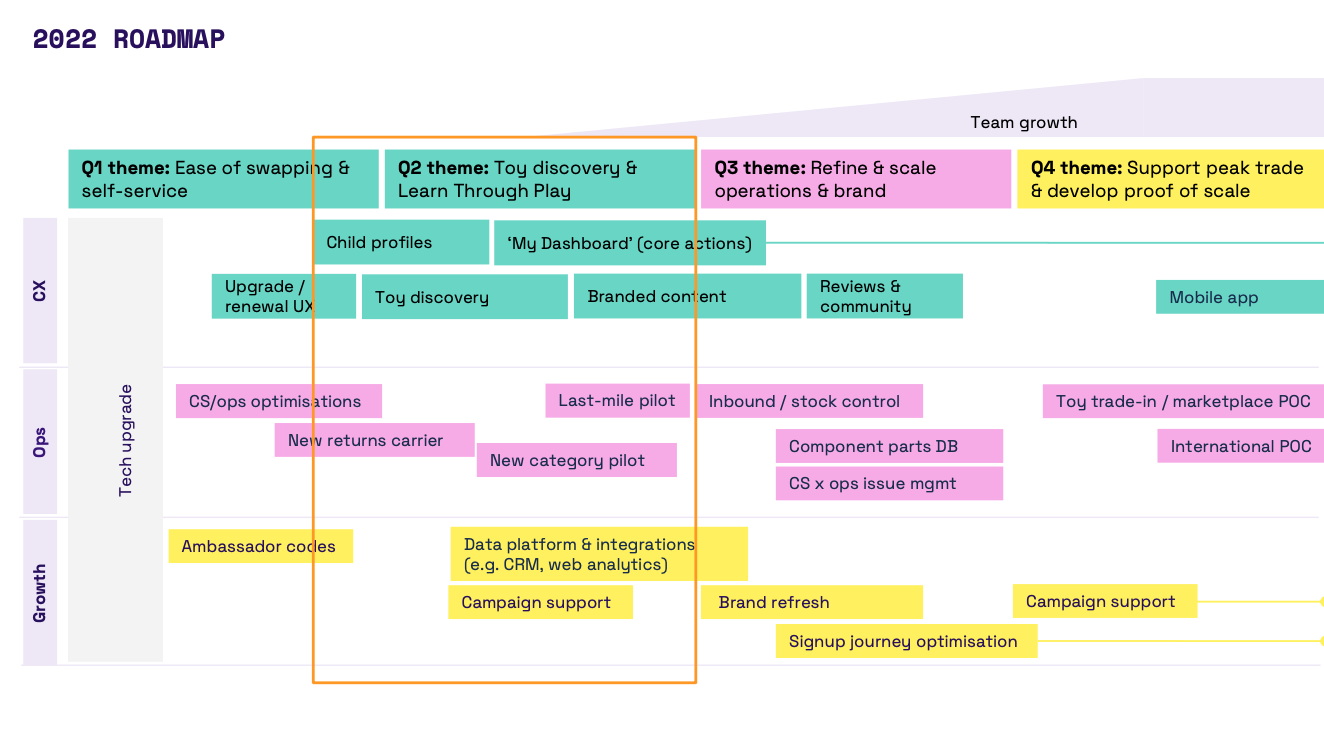
The final roadmap:
Hiring and team design
It was clear we needed to expand the team in order to meet this roadmap, and with the highest-priority areas on the table with clearly defined outcomes, it was obvious that hiring was an ROI-positive investment. I led on hiring a product designer to report into me and support on research, UX and UI of the core product, and supported on hiring of engineers.
With the team in place, I decided to split into lean product squads: a pair of engineers, the lead engineer overseeing, and myself and the product designer spanning the teams to offer support and keep things aligned.
We made sure the engineers felt bought into this and had autonomy to choose the projects that interested them and aligned to their skills.
Ways of working - rituals, reporting and execution
I implemented a loose cadence of six-week cycles driven by the roadmap milestones, broken down further into one-week sprints. This cadence, that I have used before with success, helped give longer initiatives time to be executed while still keeping a pace on scope, and the weekly cycles helped fit in smaller more tactical pieces alongside.
I began running a weekly product review, where I reported on progress, learnings, risks, and next-up plans. These were kept lightweight in prep but were welll received and kept stakeholder expectations well managed.
I coached on following strong agile principles throughout, working in tightly-iterated MVP cycles, especially for the internal and operational tooling side of things. Getting something rough but working into the hands of the end users - be they CX or warehouse workers - helped us get rapid feedback and assess at every stage if we had solved the problem effectively.
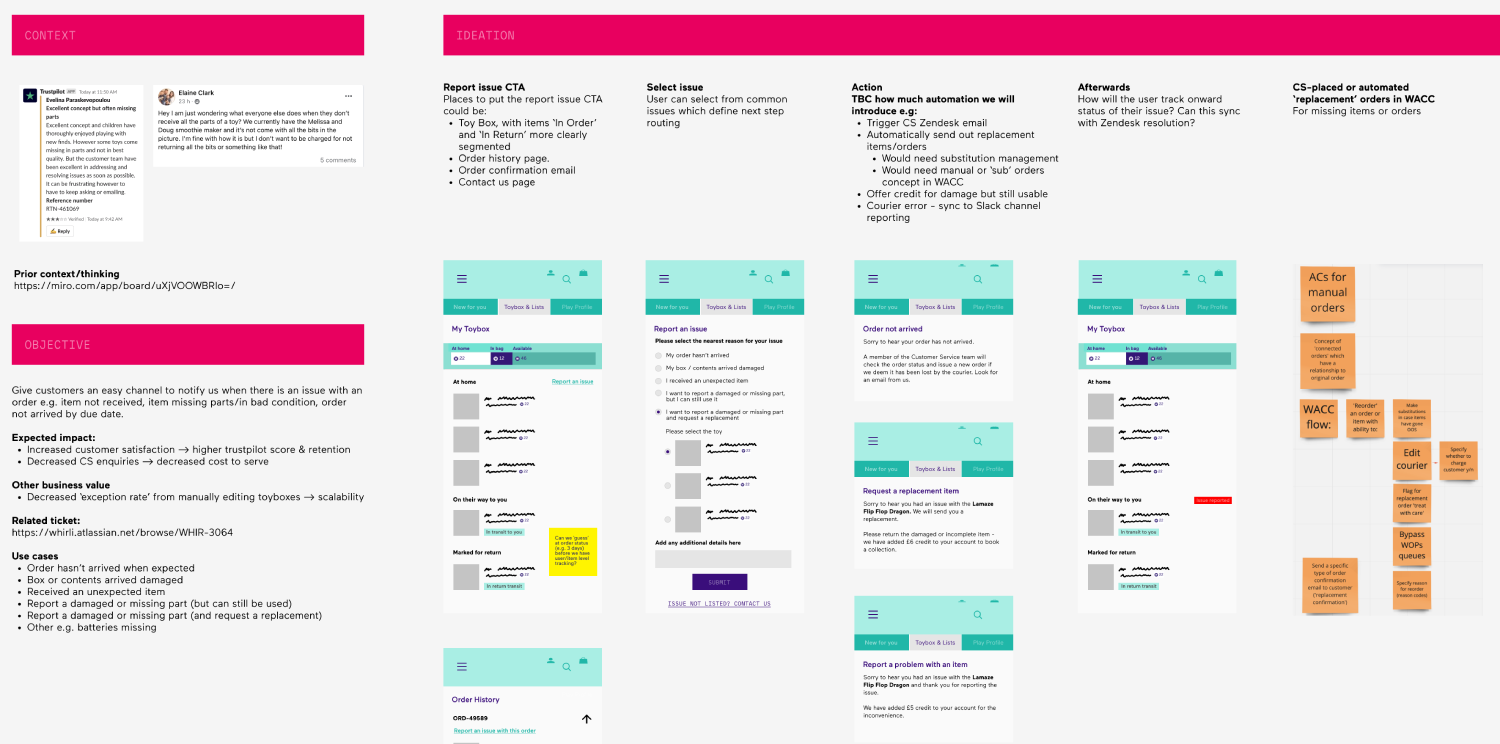
I also supported the team in negotiating how to solve technical and operational problems: when to make a foundational investment vs do something more experimentally or use a third-party supplier. We navigated areas like delivery logistics, platform analytics, and referral programs to make pragmatic decisions that balanced risk to benefit.
Finally, I made sure to always zoom between delivery and the bigger picture. I created vision decks and concept sketches for the future of the product, which were useful in movitating, aligning and selling-in our strategic direction, helped stakeholders see how they could leverage upcoming features, and continually piut these in front of customers for validation and feedback.
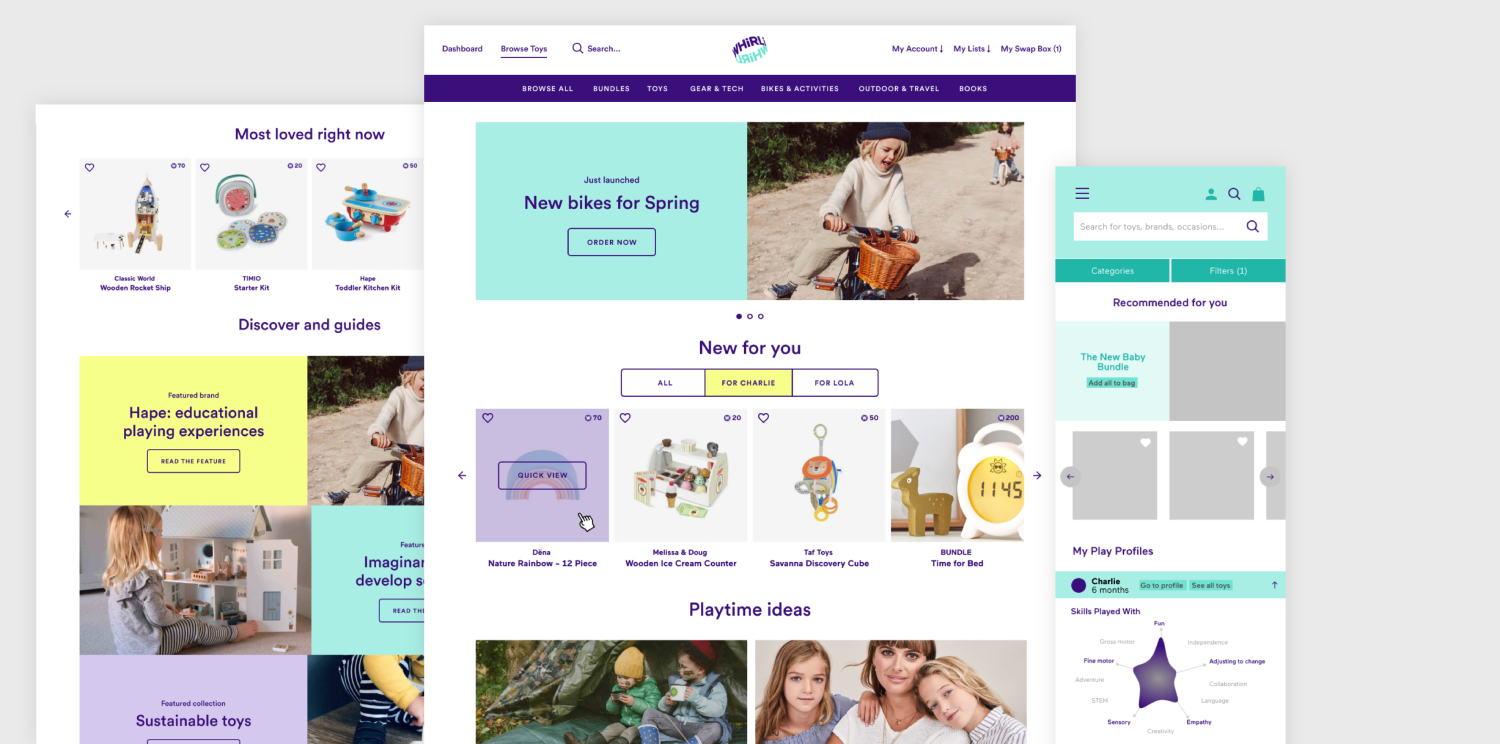
We were able to deliver on the majority of the roadmap, putting ourselves in a great place for Series A and meeting all major KPIs.
I oversaw successful delivery of:
Working on this strategic roadmap reinforced my beliefs that: